
Practice Operations and After-Hours Staffing
After-hours coverage is an operations problem before it is a clinical one. Who answers, what it costs per resolved call, where the documentation lands, and how much of it lands back on your providers the next morning are the four decisions that shape everything else.
Below: how to evaluate call handling vendors, what coverage actually costs, how call centers absorb overnight volume, what a virtual front desk does, how to lift patient adoption, and how all of it affects provider workload. Each chapter links out to a deeper article.
01Evaluating Call Handling Vendors
Answering services, call centers, and nurse triage are three different products sold with similar language. Ask what percentage of calls resolve without paging a provider, and who carries clinical liability for the advice given.
02What After-Hours Coverage Costs
The invoice is only part of it. Unresolved calls become provider time, and self-managing a rotation carries a payroll and turnover cost that rarely shows up in the comparison.
03Call Centers and Overnight Volume
Overnight volume is spiky and seasonal. Knowing what a normal night looks like for a practice your size is the only way to tell whether a quote is realistic.
04The Virtual Front Desk
Scheduling, intake, and routing can run virtually without adding headcount. Done well it takes pressure off the phones during the day, not just after hours.
05Patient Engagement and Adoption
Coverage only pays off if patients use it. Adoption comes from telling patients it exists, in the places they already look, and making the first use effortless.
06Provider Workload and Burnout
Every call that reaches a provider at 2 a.m. has a cost the next day. Reducing avoidable interruptions is one of the few burnout levers a practice fully controls.
What is the difference between an answering service and a call center?
An answering service takes and relays messages. A call center handles higher volume and more call types, but neither gives clinical direction unless a licensed nurse is on the line.
How do we know what after-hours coverage should cost?
Compare cost per resolved call rather than cost per call, and ask each vendor what share of calls end without paging a provider.
Can we run after-hours coverage in house?
Yes, and many practices do. The cost shows up in provider time, rotation fairness, and turnover rather than on an invoice.
Does a virtual front desk replace staff?
No. It shifts routine scheduling and intake off the phones so your existing team can handle the work that needs a person.
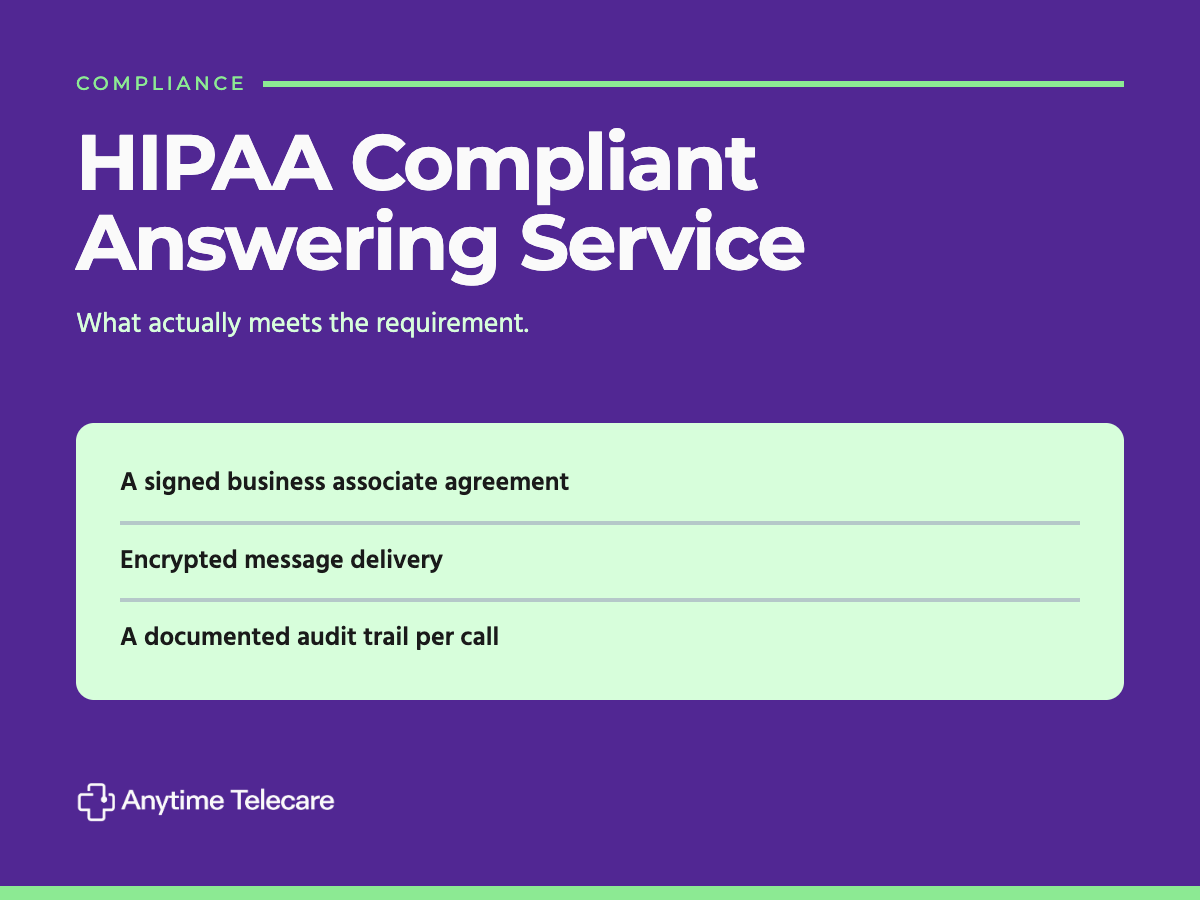
- HIPAA Compliant Answering Service: How to Verify a Vendor
- Healthcare Call Center Services: What Practices Should Evaluate
- Medical Answering Service Cost: What Practices Actually Pay
- Nurse Triage Call Center: What It Is & How It Improves After-Hours Patient Care
- Telephonic Nursing and Nurse Triage for Medical Practices
- The Hidden Costs of Self-Managing After-Hours Nurse Triage
- This Season’s Cold and Flu Season: How Predictions Can Help Pediatricians Prepare
- Raise Patient Engagement to the Next Level: 3 Ways to Cultivate Communication and Connection
- Marketing for Pediatricians : How to Promote Your Telehealth Service
- Combat Clinician Burnout
- 7 Tips for Increasing Patient Adoption of Telehealth
- Anytime Pediatrics Virtual Front Desk Workflows
- Developing Your Virtual “Front Desk”
Enhance your practice today
Talk to the nurse-led team about after-hours coverage for your call volume and specialty mix.